In Gardner, winter can shift fast. One day you’re looking at light flurries, the next there’s six inches of wet snow sitting on a flat commercial roof. That snow has weight, and if it sits too long, it creates pressure that most people don’t see until there’s a problem.
At Brewster Roofing, we’ve seen how these conditions create commercial roof stress across multi-family, industrial, and assisted living properties. The impact is often slow and hidden—until it’s not. Snow accumulation, ponding water, and ice can all exceed your roof’s load capacity, especially if the system is older or hasn’t been maintained consistently.
If you manage or own property in Gardner, winter roof safety isn’t just about snow removal. It’s about understanding how much your roof can handle, what signs to look for, and how to plan ahead.
What You’ll Learn in This Article
- How snow, ice, and temperature swings affect flat and low-slope commercial roofs
- What roof load capacity really means and how it’s determined
- Signs of excess weight on your roofing system
- What to do before winter, and what to watch for after a storm
- How Brewster Roofing helps property managers stay ahead of seasonal stress
Brewster Roofing can help. Schedule your inspection today and get clear answers.
Why Winter Roof Loads Are a Real Risk in Gardner
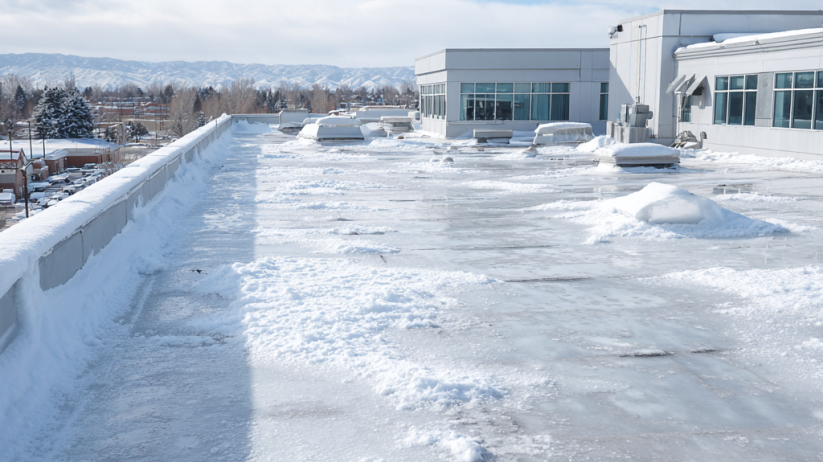
Most commercial roofs aren’t built to shed snow quickly. Flat and low-slope systems tend to hold onto snow and ice, which means the weight can add up fast. When snow turns to rain or refreezes into ice, it gets heavier, placing more stress on your roof deck and framing.
What we mean by winter roof stress
- Commercial roof stress is the gradual strain placed on the structure by snow, ice, and water that hasn’t drained properly.
- Roof load capacity refers to how much weight your roof was designed to carry. This includes live loads (like snow) and dead loads (the materials themselves).
- Winter roof safety is the process of monitoring snow buildup, keeping drains clear, and preventing damage before it becomes costly.
What’s different in Gardner
The Kansas City area often gets heavy, wet snow. One foot of wet snow can weigh up to 40 pounds per square foot. Multiply that across a large commercial building, and the load adds up quickly. Many older structures were built under different codes and may not be rated for today’s load expectations.
Fast-changing temperatures also create freeze-thaw cycles that lead to ice dams and water pooling. These conditions are especially tough on older roofing membranes and buildings that haven’t had recent inspections.
What to Consider Before You Act
Winter roofing issues aren’t always solved with a shovel. Here’s what to think through before taking action:
Budget
Preventive work usually costs far less than emergency repairs or structural damage. Costs vary based on roof type, materials, and insurance involvement. We don’t list prices on our site because each project is different, and we don’t believe in one-size-fits-all numbers.
Permits
In Gardner, any major commercial roof reinforcement or structural change may require a permit. We handle that for you as part of our process.
Materials
Not all materials respond the same to freeze-thaw cycles. For example, modified bitumen has different vulnerabilities than metal. It’s important to factor in both material type and roof age when deciding next steps.
Drainage
Blocked or frozen drains are a common cause of damage in winter. Proper drainage isn’t just about gutters—it’s also about internal drains, scuppers, and how the roof was originally designed to shed water.
A Practical Guide to Managing Winter Roof Loads
Start with an inspection before winter
It’s the simplest way to avoid surprises. We inspect the full roofing system, including decking, flashings, drainage points, and signs of prior stress. We also document problem areas so you can plan proactively.
Know your roof’s weight limits
If you’re not sure what your roof can handle, we can help review your system and building specs. Flat roofs are typically designed to support 20 to 30 pounds per square foot. Wet snow can exceed that quickly. If you manage a multi-building site, it’s worth knowing which roofs are most vulnerable.
Monitor after major storms
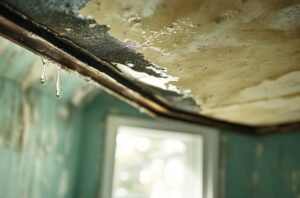
Snow might melt slowly, but load stress can build up fast—especially if snow drifts or freezes unevenly. If you notice ponding, sagging, or new interior cracks, call for an inspection. It’s safer to be cautious, especially with older buildings.
Learn more about commercial inspections and maintenance.
Don’t remove snow without the right tools
It’s tempting to clear snow yourself, but it’s easy to damage the membrane or fall through areas weakened by moisture. Our team is trained in safe snow removal, and we’re available for emergency calls, including night-time tarping when needed.
Document everything
If you end up filing an insurance claim, documentation helps. We provide photos and written reports with every service call to support your records.
Deep Dive: Which Roofing Systems Handle Winter Best?
Each roofing system has its own strengths and weaknesses in cold weather. The chart below offers a general overview based on what we see in the field.
| System Type | Winter Performance | Key Considerations |
| Modified Bitumen | Moderate | Durable if maintained, but seams and edges can split under repeated freeze cycles. |
| Metal Roofing | High | Snow sheds easily, reducing load, but flashing must be properly installed to prevent leaks. |
| Single-Ply Membranes (EPDM, PVC) | Moderate to Low | Often sensitive to pooling and edge failures. Performance depends on quality of insulation and drainage. |
| Asphalt Shingles (on sloped multi-family) | Moderate | Handles snow well with slope, but vulnerable to ice dams without adequate attic ventilation. |
Risk factors we watch for:
- Older flat roofs with aging seams or deck soft spots
- Poor drainage design or blocked scuppers
- HVAC or heavy rooftop equipment adding to live load
- Past storm damage or ongoing leaks
- Buildings that have changed use or added interior walls (which can shift load distribution)
How we help:
Our team specializes in working with property managers, HOAs, and developers who oversee multi-family, industrial, or senior living spaces. We know how to spot early signs of structural stress and recommend practical fixes that match your long-term maintenance goals.
All our work is backed by a 5-year workmanship warranty and we install systems certified by TAMKO, GAF, and other major manufacturers. That means longer coverage and fewer surprises.
Winter Roof Load Concerns: FAQs for Gardner Property Owners
If you manage commercial property in Gardner, preparing for winter isn’t optional—it’s necessary. These frequently asked questions can help clarify what to watch for, what actions to take, and when to call in a professional.