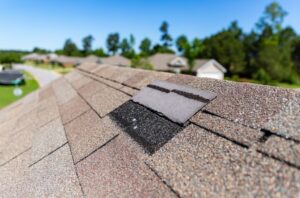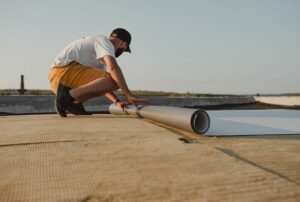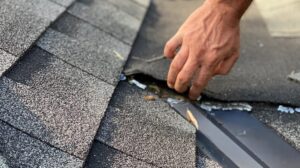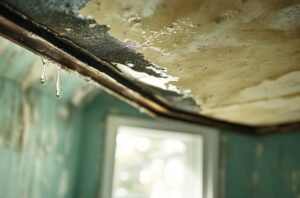
Commercial roof repairs are not meant to last forever. Every roof system eventually reaches a point where patching one area no longer solves the real problem. When leaks keep coming back, materials wear across large sections, or repairs stop holding after storms, those are clear signs that commercial roof repairs are no longer enough. In Overland Park, KS and Lee’s Summit, MO, older commercial roofs face wind, hail, heat, and winter freeze cycles that accelerate this process. A careful inspection helps determine when the roofing system itself is starting to fail rather than just one section.
We have been repairing and replacing roofs since 1964, and we have seen this pattern thousands of times. Roofs rarely fail overnight. They wear out gradually until repairs stop solving the problem.
Most building owners call us when repairs stop working. The goal of this article is to help you recognize when that point has been reached before the roof fails completely.
In this article we will explain:
- The most common signs you may need a commercial roof replacement
- How a roofing system starts to wear out over time
- When commercial roof repairs are no longer enough
- What to plan before replacing a commercial roof
- How our team approaches large commercial roofing projects
If you are dealing with an older commercial roof, Brewster Roofing can help. Schedule an inspection and we will walk the roof with you and explain what we see.
In this region, we often see buildings where repairs worked for years, then suddenly stop working after one storm or one winter. When that happens, the problem is usually the entire roofing system, not just one section.
Why Commercial Roofs Wear Out Faster in Kansas and Missouri
Commercial roofs in this part of Kansas and Missouri face constant weather stress. Strong wind storms, hail, summer heat, and winter freeze cycles gradually weaken roofing materials.
Older commercial roofs often show problems earlier in this climate than they might in milder regions.
Roofing systems usually wear out in stages.
Common causes include:
- Repeated storm damage
- Expansion and contraction from temperature changes
- Ponding water on low slope roofs
- Worn seams and flashing
- Previous repairs that no longer hold
In areas like Overland Park and Lee’s Summit, it is common to see roofs repaired several times before owners realize the system has reached the point where repairs are no longer enough to keep the building protected.
Recognizing the signs that a commercial roof may need replacement early allows building owners to plan the next step instead of reacting to emergency leaks.
What to Know Before Replacing an Older Commercial Roof
Before deciding on replacement, the first step is determining whether the roof can still be repaired reliably. Many older commercial roofs can be patched for a while, but once the system begins to wear out, repairs become temporary instead of long term.
Replacing a commercial roof also requires planning because the project affects building operations and scheduling.
Budget planning
Costs vary depending on building size, roofing material, insulation condition, and structural factors. Pricing always depends on inspection because every roof system is different.
Building codes and permits
Commercial roofs often must meet current building codes when replaced. That may involve insulation upgrades or drainage improvements.
Material selection
Different systems perform differently in this climate. The right choice depends on the building and expected lifespan.
Occupied buildings
Apartments, assisted living facilities, churches, and industrial buildings often require careful scheduling to minimize disruption.
Insurance involvement
Storm damage may influence whether repairs or replacement are recommended.
The inspection process determines whether commercial roof repairs are still enough or whether replacement should be planned.
Why Commercial Roof Repairs Eventually Stop Working
Repairs work when the underlying roofing system is still strong. Once the base materials begin to fail, patching one section does not fix the rest of the roof.
On older commercial roofs we often find:
- Insulation holding moisture under the membrane
- Fasteners pulling loose from the roof deck
- Seams that will not reseal
- Flashing worn thin from exposure
- Multiple layers of previous repairs
When these conditions exist, repairs may still slow the damage, but they no longer restore the strength of the roof. This is the point where commercial roof repairs are no longer enough to keep the building protected.
Replacement becomes the more dependable solution.
Signs You May Need a Commercial Roof Replacement Because Repairs Are No Longer Enough
Not every leak means a roof must be replaced. However, certain patterns show when the roof system has reached the point where repairs no longer solve the problem.
Frequent leaks in different areas
One leak is usually repairable. Leaks appearing in several locations often indicate the roofing system is starting to fail.
This is often the first indication that repairs are no longer solving the problem and the roof itself is wearing out.
Repairs that do not last
If the same section needs repair more than once, the underlying materials may already be failing.
Examples include:
- Seams separating again
- Flashing loosening after storms
- Coatings wearing off quickly
These are clear signs a commercial roof may need replacement.
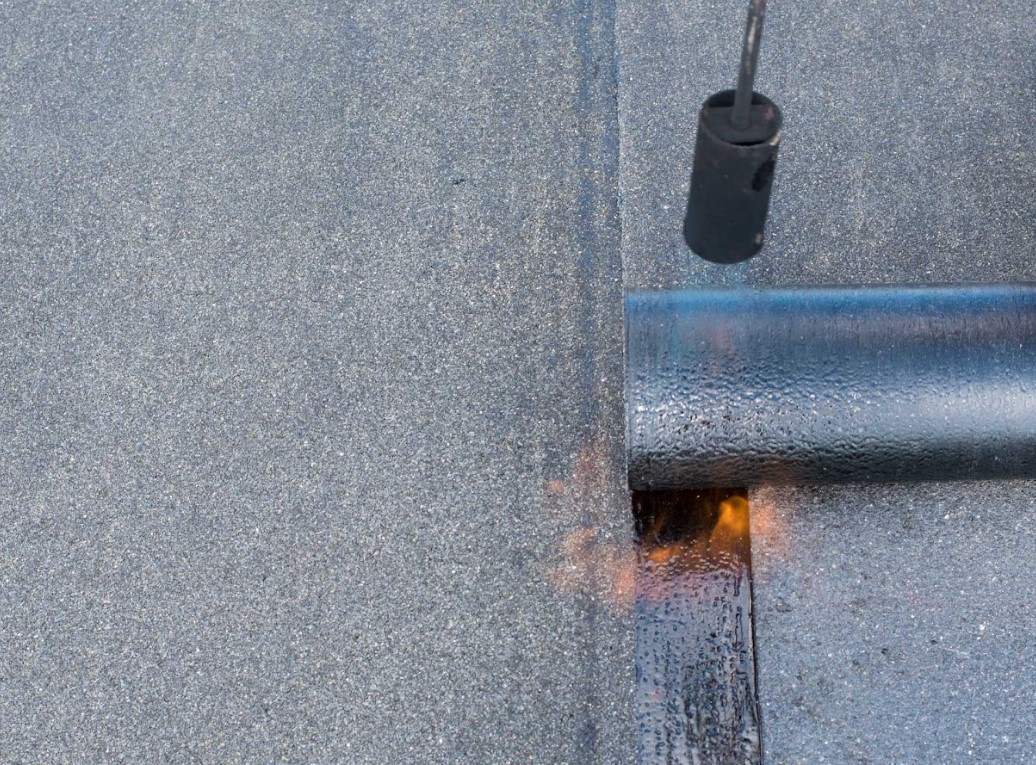
Ponding water on flat or low slope roofs
Standing water is a common reason commercial roof repairs stop working on older buildings.
Ponding water can:
- Break down roofing membranes
- Damage insulation
- Weaken seams
- Lead to future interior leaks
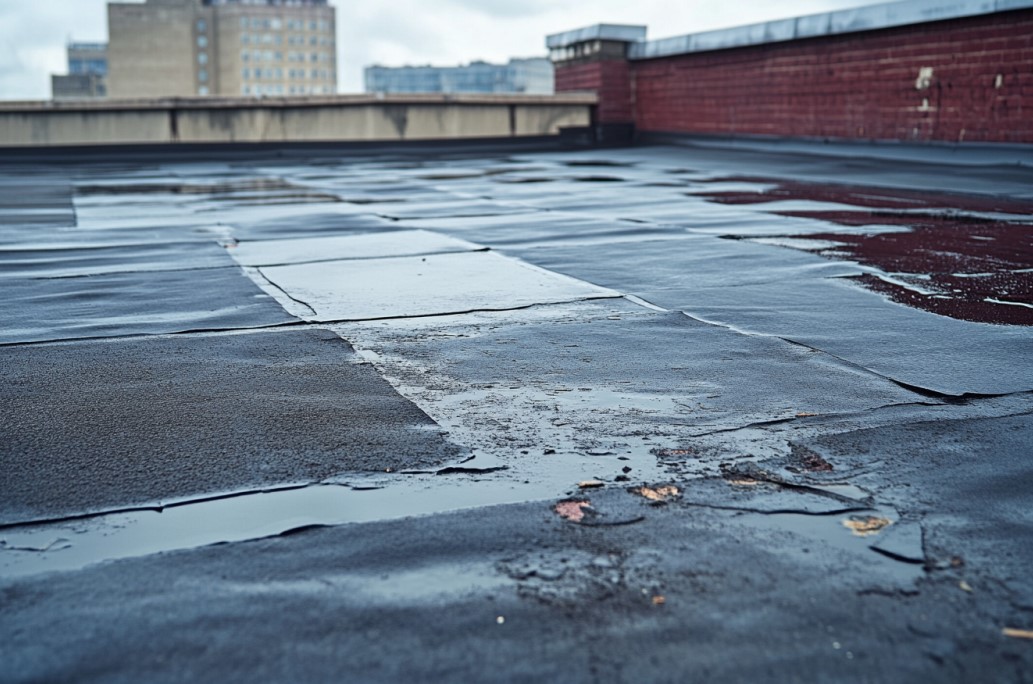
Visible wear across large sections
When damage affects wide areas of the roof, patching becomes temporary.
Examples include:
- Cracked membrane
- Brittle roofing materials
- Worn protective coatings
- Loose perimeter metal
At this stage the roofing system is approaching the end of its life.
Storm damage on an older roof
Wind and hail frequently push older commercial roofs past the point where repairs hold.
We see this often in the Kansas City area, including Overland Park and Lee’s Summit.
Repairs needed every year
When repairs become routine maintenance, the system has likely reached the stage where repairs are no longer enough.
Warranty expired or no longer valid
Once the original warranty expires, repairs often cannot restore full system protection.
At this stage replacement becomes the more reliable option.
When Repair Makes Sense vs When Replacement Makes More Sense
This comparison helps determine whether commercial roof repairs are still enough or whether the roof has reached the stage where replacement makes more sense.
Repairs are often appropriate when:
- Damage is limited to one section
- The roof is still within its expected lifespan
- Seams and flashing remain strong
- Warranty protection still applies
Replacement becomes the better option when:
- Leaks appear in multiple locations
- Storm damage affects large areas
- Insulation or decking is compromised
- Repairs occur regularly
- The roof is near the end of its lifespan
When repairs only last a short time, it usually means the roof has reached the point where repair is no longer enough to keep the system reliable.
Planning replacement early usually reduces long term costs.
Deep Dive: How Different Commercial Roofing Systems Reach the Point Where Repairs Are No Longer Enough
Different roofing systems show signs they may need replacement in different ways. During inspections we evaluate the entire roof system to determine when repairs are no longer enough.
Roofing System | Common Failure Signs | Why Repairs Stop Working | What We Check |
Modified Bitumen | Cracked surface, seam splits | Material becomes brittle | Seams, flashing, insulation |
Metal Roofing | Loose fasteners, corrosion | Movement loosens joints | Panels, trim, fasteners |
Coated Roof Systems | Peeling coating | Base material exposed | Coating thickness |
Multi-family roofs | Leaks across units | Large roof areas wear unevenly | Edges, transitions |
Flat roofs | Ponding water, soft areas | Moisture trapped below | Drainage, insulation |
Older systems | Multiple repairs | Base materials worn out | Full system condition |
Expected lifespan and replacement timing
Most commercial roofs last around 20 to 30 years depending on material and weather exposure.
Replacement becomes more likely when:
- Large areas show wear
- Moisture exists under the roof
- Repairs no longer hold
- Energy efficiency declines
When these conditions appear across wide areas, repairs usually stop working and replacement becomes the dependable option.
Many of our commercial projects involve apartments, HOA properties, assisted living facilities, churches, and industrial buildings where long term reliability matters more than temporary repairs.
Commercial Roof Replacement FAQs for Property Owners in Kansas and Missouri
When commercial roof repairs stop working, building owners usually have the same questions. These come up often during inspections on older commercial roofs where it is not clear if the roof can still be repaired or if replacement is the better option.