Caught in a Roof Leak Emergency? Here’s What Kansas City Homeowners Should Know
It’s storming outside. You hear dripping. Then you see the stain. Your roof is leaking—and now you’re scrambling to figure out what to do.
At Brewster Roofing, we get calls like this all the time, especially after a hailstorm or a stretch of heavy rain. And while you can’t stop the storm, you can take smart steps to limit damage before repairs begin.
If you’re searching for emergency roof repair in Kansas City, or just need practical roof leak help, this guide will walk you through how to stay safe and protect your home until the professionals arrive.
In this post, you’ll learn:
- How to act quickly without risking your safety
- How to minimize damage while waiting for repairs
- What roof tarping is and when to use it
- What insurance companies expect from you
- How to prevent this from happening again
Need help right away? Brewster Roofing is a phone call away.
Why Fast Action Matters in a Roof Leak Emergency
Roof leaks are often more dangerous than they seem. Water travels fast—and silently—into ceilings, insulation, wall cavities, and electrical systems. If left alone, the damage multiplies.
Kansas City storms are known for hail, wind, and heavy rain. Those conditions often cause the types of roof failures that require emergency attention.
We see it all the time:
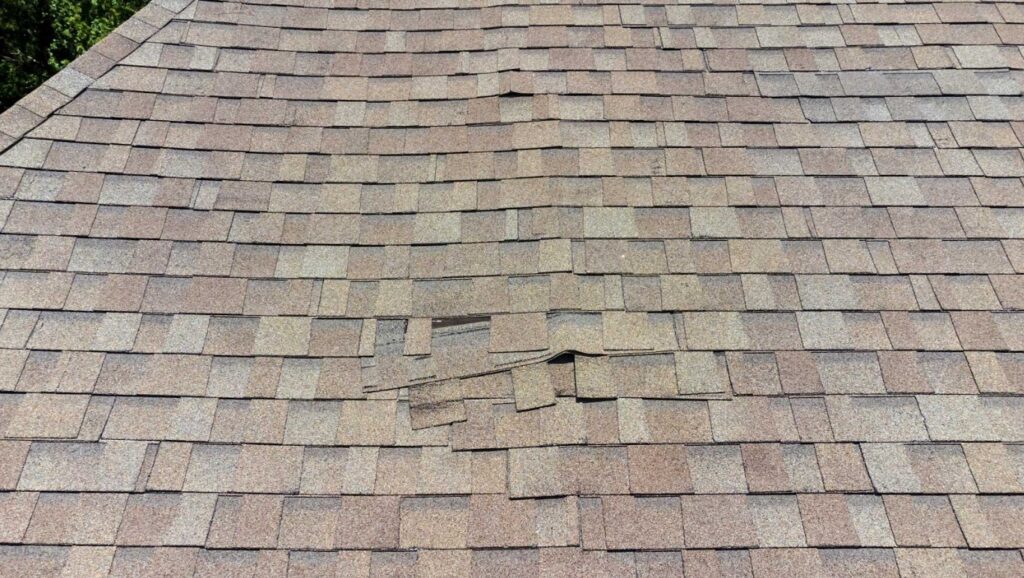
- Hail damage that punctures shingles
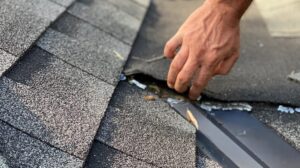
- Flashing blown loose by wind
- Tree limbs breaking through the roof line
- Ice damming during winter thaws
Even if the leak looks small, acting fast can protect you from major structural issues.
How to Spot Roof Damage Safely
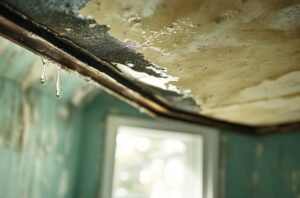
Before you take any action, it helps to identify where the leak is coming from—as long as you can do it without putting yourself in danger. Start by checking the inside of your home. Look for new stains on ceilings or walls, bubbling paint, musty odors, or drips coming from light fixtures or vents. These signs often point to water entering from above.
If you can safely access your attic, use a flashlight to look for damp insulation, dark streaks on rafters, or active dripping. Listen for the sound of water hitting surfaces.
From the ground, do a quick visual scan of your roof. Look for missing shingles, bent flashing, debris piles, or dents from hail. Never climb onto the roof during or after a storm—your visual inspection should be strictly from a safe distance.
Why Early Detection Saves You Money
Spotting roof damage early saves homeowners thousands in repairs. Small openings caused by hail, wind, or loose flashing often let water travel into hidden areas long before you see a drip. Over time, this moisture can damage insulation, warp decking, cause mold growth, and weaken structural components. The sooner you identify a problem, the more likely you are to prevent major—and expensive—repairs down the road.
If you want more guidance on what to do after severe weather hits, check out our companion post: “What to Do After a Storm Hits: A Guide for Overland Park Homeowners.” It walks you through the exact steps to take once the skies clear so you can spot damage early and protect your home.
Step-by-Step: What to Do While You Wait for Emergency Roof Repairs
The following steps are designed to help you manage an active roof leak during bad weather or off-hours, when a full repair may not be possible right away.
1. Prioritize safety
Your safety comes first. Move people, pets, and valuables away from the affected area and avoid standing under a wet ceiling—saturated drywall can collapse without warning. If you notice water near light fixtures or electrical outlets, shut off power to that section of your home.
Avoid going outside during active weather, and never climb onto a wet or storm-damaged roof. Even minor instability can make the surface unsafe. All initial damage checks should be done from inside your home and from the ground until professionals arrive.
2. Minimize water damage
Contain the leak by placing buckets, bins, or other containers underneath the drip. Use plastic sheeting, trash bags, or towels to protect furniture and flooring.
If water is pooling, a wet/dry vacuum can help. Remove soaked rugs or carpets to reduce the risk of mold.
3. Call a professional roofing contractor
Reach out to a licensed roofer who offers emergency roof repair and tarping services in Kansas City. The sooner you call, the sooner you’re on the schedule.
Be cautious of storm-chasing contractors who show up unsolicited. Many don’t have local credentials, and few stick around after the job.
At Brewster Roofing, we’ve served the Kansas City area for more than 60 years. We offer same-day roof tarping services and full post-storm inspections.
4. Avoid DIY roof work
Trying to repair the roof yourself during a storm—or shortly after—isn’t worth the risk. Roofing is hazardous in good conditions, and it’s especially unsafe when it’s wet or windy.
If you have attic access or a safe window near the leak, you may be able to position a tarp from the inside. But don’t do anything that compromises your safety.
5. Document the damage
Take photos or videos of all affected areas—interior and exterior. Document the water stains, the leak source (if visible), fallen debris, and anything else you think might help a contractor or insurance adjuster.
Make notes about when the leak started, what the weather was like, and any emergency steps you took.
6. Contact your insurance provider
Report the issue to your insurance company. Provide all documentation—photos, video, and receipts for anything you spent on temporary protection.
If you’ve already scheduled an inspection or had emergency tarping installed, let your insurer know. Adjusters often want reports from licensed contractors to help evaluate claims.
7. Schedule a full roof inspection
Temporary solutions like tarping are important—but they don’t fix the underlying problem.
Once the weather clears, your roofing contractor should perform a full inspection of:
- Shingles
- Flashing
- Underlayment and decking
- Chimneys and vents
- Gutter systems
- Attic insulation and ventilation
Hidden damage can lead to future leaks, energy inefficiency, and even health risks from mold. A full inspection prevents small issues from being missed.
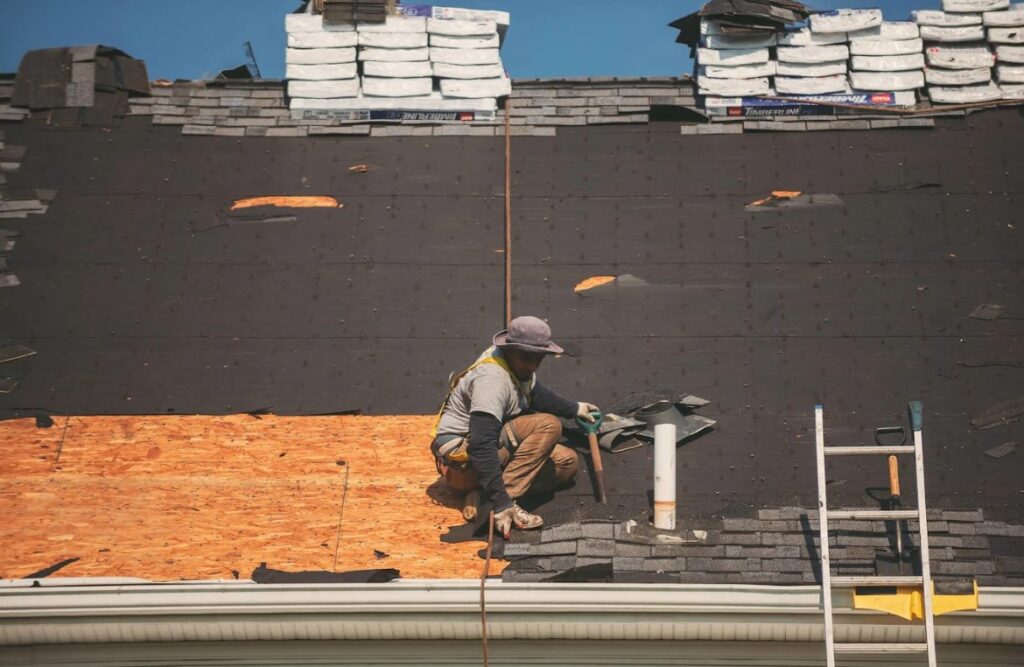
8. Plan permanent roof repairs or replacement
Depending on the inspection results, your roofer will recommend:
- A spot repair
- Partial roof replacement
- A full roof replacement
Your contractor should explain what’s needed and why. In Kansas City, we often recommend upgrading to impact-resistant shingles or stone-coated steel roofing when appropriate.
At Brewster Roofing, we install:
- Architectural and luxury shingles (TAMKO, GAF, Owens Corning)
- Stone-coated steel roofing
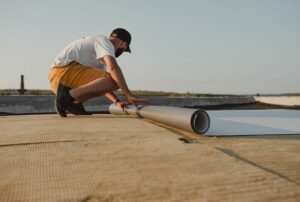
- Modified bitumen for commercial flat roofs
We also offer a 30-year non-prorated material warranty and a 5-year workmanship warranty.
9. Prevent future roof emergencies
Emergency roof repairs are sometimes unavoidable—but regular maintenance can reduce your risk.
We recommend:
- Cleaning gutters twice a year
- Trimming trees near your roof
- Checking your attic after major storms
- Watching for missing shingles or granule loss
- Scheduling annual roof inspections
Many of our customers choose a spring or fall maintenance check to stay ahead of the storm season. But even with regular upkeep, not all roof damage shows up right away.
Some issues—like hail bruising or flashing separation—can remain hidden until colder weather sets in. Here’s how storm damage can hide until winter and what to do about it. It’s worth knowing what to look for before the next season hits.
What Is Roof Tarping and Why It Helps
Roof tarping is a temporary solution that protects your home while you wait for repairs. A heavy-duty tarp is secured over the damaged area to prevent further water intrusion.
This service is essential when:
- The roof is still leaking
- Conditions are unsafe for full repairs
- More storms are expected in the short term
At Brewster Roofing, we provide professional roof tarping across Kansas City, including for:
- Residential homes
- Apartments and HOAs
- Churches and nonprofit buildings
- Assisted living facilities
- Commercial and industrial properties
Our crews are experienced and insured. We’ll secure the tarp properly and return for permanent work when conditions allow.
Roof Leak Emergencies: Common Questions Kansas City Homeowners Ask
When your roof starts leaking unexpectedly, it’s natural to have questions—especially if you’ve never dealt with a roofing emergency before. Here are some of the most common concerns we hear from homeowners across Kansas City, along with clear answers to help you take the next right step.
What qualifies as an emergency roof repair?
An emergency roof repair is any situation where water is actively leaking into your home and causing damage. This often happens during storms, when shingles fail, flashing comes loose, or debris causes punctures. If interior ceilings, walls, or insulation are being exposed to moisture, that’s an emergency.
How fast can Brewster Roofing respond to an emergency?
Brewster Roofing can often respond with same-day emergency tarping in Kansas City and surrounding areas. While availability depends on weather and demand, we prioritize homes with active leaks or ongoing water damage.
Can I tarp my own roof during a leak?
Tarping your own roof during a leak is not recommended unless conditions are completely safe and dry. Most roof surfaces are slippery, especially during storms, and installing a tarp improperly can make the problem worse. It’s safest to call a roofing professional for temporary protection.
Will insurance cover emergency roof tarping?
Yes, emergency roof tarping is typically covered by homeowners insurance when it prevents additional damage after a covered event. Most policies reimburse you for the cost of emergency mitigation like tarping, but it’s important to document everything and contact your provider quickly.
What type of roofs does Brewster Roofing repair?
Brewster Roofing repairs asphalt shingle roofs, metal roofing systems, and commercial flat roofs such as modified bitumen. We work on both residential and commercial buildings throughout Kansas City and nearby areas.
Should I inspect the ceiling if I see signs of a roof leak?
If you see signs of a roof leak, it’s best not to disturb the ceiling yourself. Wet drywall can collapse or release built-up water suddenly. Instead, document the area and call for a professional roof inspection and interior assessment.
How long can a tarp safely stay on my roof?
A roof tarp can safely stay in place for one to two weeks, depending on the weather and how well it was installed. It’s meant as a short-term solution to keep water out until permanent repairs can be completed.
Conclusion: When a Roof Leak Happens, Take the Right First Steps
A roof leak in the middle of a storm is stressful. But even when repairs can’t happen immediately, there are smart ways to protect your home and avoid bigger problems.
Focus on safety. Document the damage. Bring in a professional. And once the weather clears, schedule an inspection and get a long-term fix in place.
At Brewster Roofing, we’ve helped thousands of homeowners across Missouri and Kansas manage roofing emergencies—and come out of them with stronger, longer-lasting roofs.
If you need emergency roof repair in Kansas City or fast-response tarping services, get in touch with us today.