Spring and summer storms across Kansas and Missouri rarely arrive quietly. In this region, it is not unusual to see golf ball or even baseball-sized hail move through neighborhoods in less than fifteen minutes. Homeowners in places like Overland Park, KS and Lee’s Summit, MO are especially familiar with how quickly severe weather can move through the area. We regularly inspect roofs that looked fine immediately after a storm but developed leaks months later because the damage was hidden beneath the surface.
That uncertainty is understandable. Hail damage is not always obvious from the ground, and asphalt shingles and metal roofing systems respond very differently after severe weather. Some roofs show visible damage immediately. Others slowly weaken over time as flashing, granules, and protective coatings continue deteriorating after the storm has passed.
For homeowners in hail-prone areas, understanding those differences matters. The right roofing system affects long-term maintenance costs, insurance claims, repair frequency, and overall roof lifespan.
In this guide, we’ll cover:
- How hail affects asphalt shingles versus metal roofs
- What hidden storm damage actually looks like
- Whether impact resistant roofing is worth considering
- How insurance companies evaluate hail damage claims
- When a storm roof assessment makes sense after severe weather
If your property recently sustained hail or wind damage, Brewster Roofing can help with a professional roof inspection and storm-damage assessment.
Why Hail Damage Is a Serious Roofing Problem in the Midwest
Kansas and Missouri sit directly within one of the most active hail corridors in the country. Spring supercells, strong straight-line winds, and rapid temperature swings create repeated stress on roofing systems throughout the year. In Johnson County and surrounding parts of the Kansas City metro, many neighborhoods built in the 1990s and early 2000s are now reaching the point where storm exposure and roof age start overlapping.
Large hailstorms in this region are often accompanied by strong wind gusts that drive hail into roof slopes at sharper angles. That matters because wind-driven hail tends to create concentrated impact damage around roof edges, flashing, vents, and exposed slopes. This is something we regularly see during inspections throughout Overland Park, KS and Lee’s Summit, MO after spring storm season.
One of the biggest differences between asphalt shingles and metal roofing is how damage develops over time. Asphalt shingles often absorb impact and slowly deteriorate beneath the surface, while metal roofing systems are more likely to show visible denting or coating damage immediately after a storm.
A roof may appear fine from the street while sustaining:
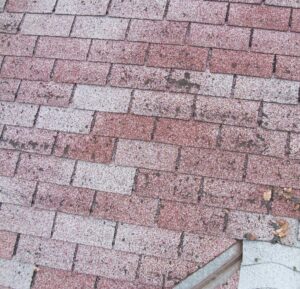
- Granule loss
- Bruising beneath shingles
- Damaged flashing
- Loosened seams
- Microfractures in protective coatings
- Moisture intrusion around penetrations
These issues can shorten roof lifespan long before visible leaks appear.
Functional Damage vs. Cosmetic Damage
Insurance carriers often evaluate hail claims differently depending on whether the damage is functional or cosmetic.
Functional damage affects the roof’s ability to shed water properly.
Examples include:
- Cracked shingles
- Torn membranes
- Exposed substrate
- Compromised flashing
Cosmetic damage affects appearance without immediately impacting waterproof performance.
Examples include:
- Minor dents on metal panels
- Surface scuffing
- Small granule displacement
The challenge is that cosmetic damage can still reduce long-term roof performance, especially after repeated storms.
What Homeowners Should Know Before Scheduling Repairs
Before deciding whether to repair or replace a roof after hail damage, homeowners should understand a few important factors.
Roof Age Matters
Older roofs typically sustain more severe hail damage because shingles become brittle over time. A newer roof with isolated impact points may only require repairs, while an older roof with widespread bruising may be nearing replacement age.
This is especially common in established neighborhoods throughout Overland Park, KS where many homes were built decades ago and are now dealing with repeated storm exposure.
Roofing Material Impacts Storm Performance
Asphalt shingles and metal roofs respond differently during hailstorms. Shingles absorb impact into the granule surface and asphalt layer, while metal roofing disperses impact across the panel itself.
That distinction affects:
- How damage appears
- How quickly problems develop
- Repair methods
- Long-term durability
Insurance Documentation Is Critical
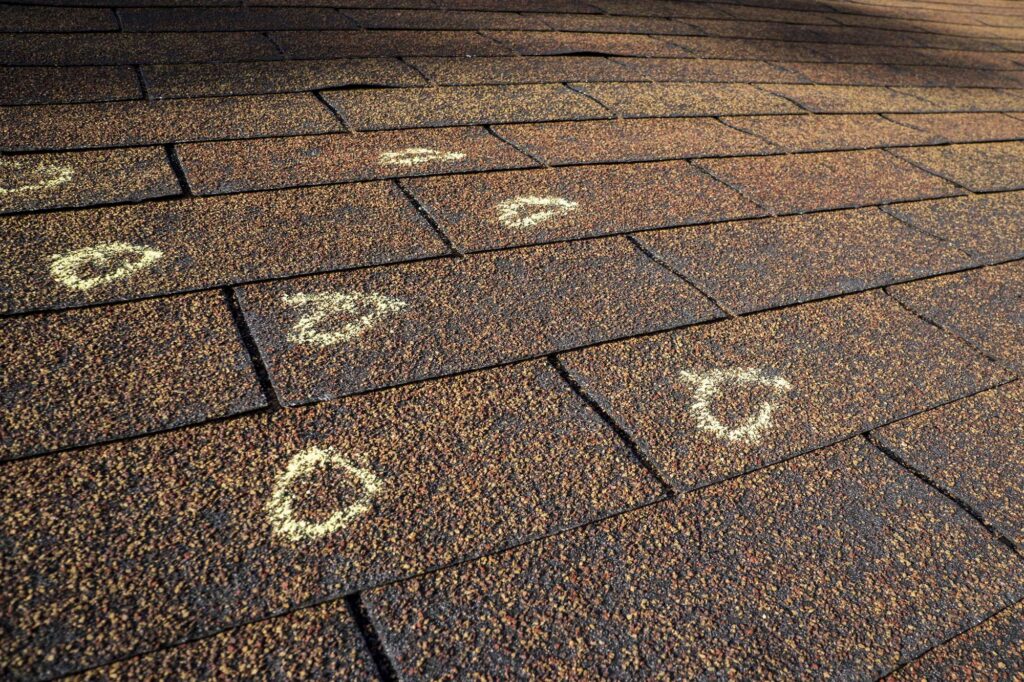
A professional storm roof assessment helps document damage accurately. This can make a significant difference during the insurance claims process, especially when hidden damage is involved.
HOA Requirements May Affect Material Choices
In many Midwest HOA communities, roofing materials and colors must meet neighborhood standards. That can influence whether homeowners choose architectural shingles, Class 4 impact resistant shingles, or metal roofing systems after storm damage. This comes up frequently in HOA-managed communities throughout both Overland Park, KS and Lee’s Summit, MO.
How Hail Damage Affects Asphalt Shingle Roofs
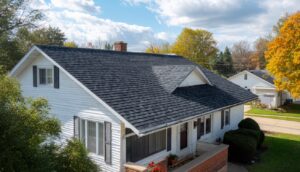
Asphalt shingles remain the most common residential roofing material across Kansas and Missouri because they balance affordability, appearance, and overall durability well in Midwest weather. However, hail affects asphalt shingles differently than metal roofs because shingles are designed to absorb impact rather than deflect it.
When hail strikes an asphalt roof, the damage is often less visible initially but more destructive beneath the surface. Instead of denting like metal, shingles lose protective granules, develop bruising, and gradually weaken over time.
Granule Loss and Roof Bruising
Granules protect the asphalt layer beneath from UV exposure. When hail knocks granules loose, the shingle becomes more vulnerable to:
- Premature aging
- Moisture intrusion
- Heat deterioration
- Cracking during freeze-thaw cycles
Larger hailstones may also create bruising beneath the surface. These soft impact zones weaken the structural integrity of the shingle over time.
Why Bruising Is Often Missed
Bruising may not be visible without a physical inspection. Many homeowners assume the roof survived the storm because leaks have not appeared yet.
One of the most common misconceptions we hear during inspections in Lee’s Summit, MO is that leaks appear immediately after hail. In reality, many roof leaks develop slowly over the following seasons as weakened shingles continue deteriorating through heat, cold, and repeated rain exposure.
Hidden Moisture Intrusion After Hail
Hail damage does not always create immediate water penetration.
Instead, storms often weaken vulnerable areas first:
- Flashing around chimneys
- Roof vents
- Pipe boots
- Valleys
- Ridge transitions
We often inspect roofs where homeowners were told everything looked fine after a storm, only to discover moisture intrusion months later. That delayed failure pattern is one reason storm roof assessments are so important in hail-prone areas.
Reduced Roof Lifespan
Even when shingles remain visually intact, repeated hail impacts can shorten overall roof lifespan significantly.
This is especially common on:
- Older three-tab shingles
- Poorly ventilated roofs
- Roofs with previous installation problems
- Homes exposed to repeated wind-driven storms
A roof designed to last 20 to 25 years may begin failing much sooner after multiple severe weather events.
How Hail Damage Affects Metal Roofs During Severe Storms
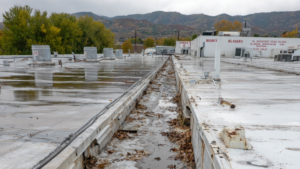
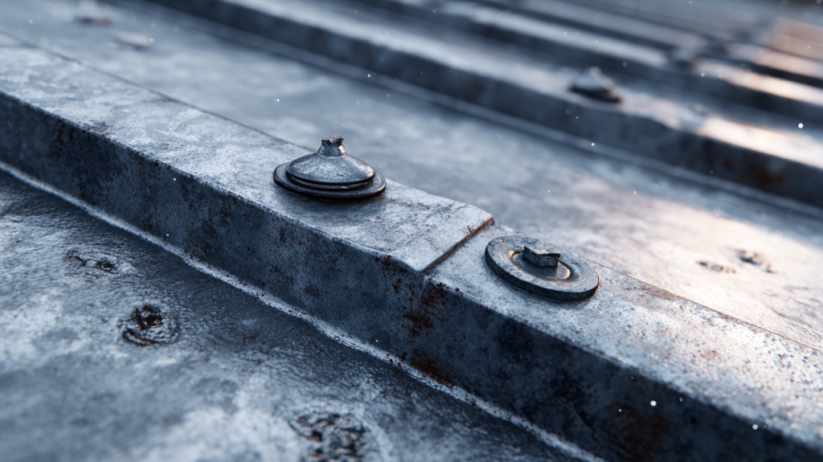
Metal roofing systems generally perform better structurally during hailstorms, but they are not immune to damage. Hail affects metal roofs differently than asphalt shingles because metal disperses impact across the panel surface instead of absorbing it.
That often helps prevent immediate water intrusion, but it can create cosmetic denting and stress around seams, fasteners, and coatings.
Many homeowners assume metal roofs are completely hail-proof. In reality, we still see denting, coating damage, and seam stress after larger Midwest storms, especially on thinner panels.
Cosmetic Denting on Metal Roofs
The most common form of metal roof hail damage is cosmetic denting.
Unlike shingles, metal roofing often continues performing structurally even after impact damage occurs. However, dents may still:
- Affect curb appeal
- Reduce perceived property value
- Create HOA concerns
- Weaken protective finishes over time
For commercial properties and visible residential roofs, appearance can still matter significantly. This is especially true in highly visible neighborhoods and HOA communities throughout Overland Park, KS.
Gauge Thickness and Durability
Not all metal roofing systems perform equally during hailstorms.
Heavier-gauge panels generally resist denting better than thinner systems.
For example:
- Standing seam systems often perform better than exposed fastener systems
- Stone-coated steel offers additional impact resistance
- Higher-quality coatings improve long-term weather protection
Material selection matters just as much as installation quality.
How Hail Damage Differs Between Asphalt Shingles and Metal Roofing
When homeowners compare asphalt shingles and metal roofing after a hailstorm, the real difference is not simply which roof gets damaged. It is how the damage appears, how quickly problems develop afterward, and how repairs are typically handled.
Asphalt shingles tend to hide hail damage more effectively at first because the material absorbs impact into the granule surface and asphalt layer. Metal roofing systems, on the other hand, usually reveal storm damage more visibly through dents and coating marks.
One system disguises damage while slowly weakening over time. The other often shows damage immediately while continuing to protect the structure underneath.
| Feature | Asphalt Shingles | Metal Roofing |
| Hail Resistance | Moderate to High with Class 4 shingles | High |
| Most Common Damage | Granule loss, bruising, cracking | Denting, coating wear |
| Cosmetic Visibility | Often subtle at first | Usually visible immediately |
| Leak Risk Over Time | Higher after repeated storms | Lower structurally |
| Repair Complexity | Easier localized repairs | More specialized repairs |
| HOA Compatibility | Excellent | Varies by neighborhood |
| Long-Term Storm Lifespan | Moderate | Longer overall |
| Upfront Cost | Lower | Higher |
For many homeowners in Kansas and Missouri, architectural or impact resistant shingles provide a practical balance between affordability, storm performance, and neighborhood appearance standards. Metal roofing often makes more sense for homeowners focused on long-term durability and reduced maintenance.
Why Impact Resistant Roofing Matters in Hail-Prone Areas
Impact resistant roofing is designed to better withstand hail and flying debris during severe weather, but the way those materials respond still depends on whether the roof is asphalt-based or metal.
For asphalt shingles, impact resistance focuses on reducing granule loss, cracking, and bruising after hail strikes. For metal roofing systems, impact resistance is more about reducing denting, preserving coatings, and maintaining structural integrity during storms.
Understanding Class 4 Shingles
Class 4 shingles represent one of the highest impact resistance ratings available for asphalt roofing.
Testing typically involves steel ball impact simulations designed to replicate hail conditions.
Benefits may include:
- Reduced storm damage
- Longer roof lifespan
- Improved crack resistance
- Potential insurance incentives
However, no roofing system is completely hail-proof.
Impact resistant roofing reduces vulnerability. It does not eliminate storm damage entirely. We explain this during inspections because many homeowners are told impact resistant shingles are essentially hail-proof, which simply is not realistic in severe Midwest weather.
Why Hail Damage to Soft Metals Helps Reveal Roofing Problems
One of the first places inspectors often look after a hailstorm is not the shingles themselves. It is the soft metals around the roofing system.
This includes:
- Gutters
- Downspouts
- Flashing
- Roof vents
- Window wraps
- AC condenser fins
Soft metal damage often helps explain how hail affected the roofing material itself. Asphalt shingles may hide impact damage initially, while metal roofing may show visible dents immediately.
After major storms, we commonly inspect roofs throughout Overland Park, KS and Lee’s Summit, MO where gutters and soft metals show obvious impact marks while the shingles appear normal from the ground. That is why thorough inspections matter. Hidden roofing damage often tells a different story up close.
When Repairs Make More Sense Than Replacement After Hail Damage
Not every hail-damaged roof needs replacement.
Some asphalt roofs experience localized granule loss or isolated flashing damage that can be repaired successfully. Some metal roofing systems may sustain cosmetic denting without compromising waterproof performance.
The right solution depends on how the roofing material responded to the storm, not simply whether hail was present.
Repairs often make sense when:
- Damage is isolated
- The roof is relatively new
- Flashing issues are localized
- The roofing system is otherwise in good condition
We regularly inspect roofs where repairs are the more practical option. The goal after a storm is not automatically replacing a roof. The goal is understanding what damage actually exists, what problems may develop later, and what solution makes the most sense long term.
Can Hail Damage Cause Delayed Roof Leaks?
Yes, hail damage can absolutely cause delayed roof leaks.
This is one of the most misunderstood aspects of storm damage, especially with asphalt shingles.
Many leaks appear months after the original storm because:
- Protective granules slowly wear away
- Underlayment weakens over time
- Flashing separation worsens gradually
- Moisture intrusion develops incrementally
- Freeze-thaw cycles continue expanding weakened areas
In the Midwest, delayed deterioration is especially common because roofs continue experiencing temperature swings long after storm season ends.
How Insurance Companies Evaluate Hail Damage Claims
Insurance carriers generally look for evidence that hail damage affects roof performance.
This often includes:
- Functional shingle damage
- Material fractures
- Water intrusion risks
- Wind-related displacement
- Visible impact patterns
One challenge homeowners face is that cosmetic damage may not qualify for full replacement depending on policy language. This is especially common with metal roofing systems where dents may not immediately affect waterproof performance.
That is why detailed documentation and professional inspections matter.
The focus during an inspection should be clarity, not pressure.
Choosing Between Asphalt Shingles and Metal Roofing in Hail-Prone Areas
When evaluating roofing systems after storm damage, homeowners should think beyond immediate repairs and focus on how each roofing material performs over time after repeated hail exposure.
Asphalt shingles may offer:
- Lower upfront costs
- Easier repairs
- Better HOA compatibility
- More traditional appearance options
Metal roofing may offer:
- Longer lifespan
- Greater structural durability
- Lower long-term maintenance
- Stronger wind resistance
The best roofing system depends on:
- Storm exposure
- Long-term ownership goals
- Budget
- Appearance preferences
- Maintenance expectations
There is rarely a one-size-fits-all answer.
Common Questions About Hail Damage on Asphalt Shingles and Metal Roofs
After major storms move through Kansas and Missouri, homeowners usually have practical questions about how hail affects different roofing materials, what damage actually looks like, and whether repairs or replacement make more sense. These are some of the most common questions we hear during post-storm inspections.